
Mount San Biagio
Monte San Biagio (in the position of Castello) is the place where it was decided to build the great statue of Christ the Redeemer that would dominate the territory and the bay.
Monte San Biagio boasts a centuries-old and fascinating history. The site has always been referred to as a place of worship: tradition holds that in pagan times there was a temple dedicated to the goddess Minerva at the spot where the Basilica now stands.
The presence of Basilian monks in these places is documented during the first millennium of the Christian era. Starting from the 6th century AD, they emigrated from the East and settled in various areas of Southern Italy.
But the event that most significantly identifies the religious vocation of this site is the arrival of the relics of Saint Blaise: a legend tells that a boat brought them here during a stormy night in 732 AD to save them from the iconoclasm that was raging in the East.
It is likely that the decision to house the relics of the Armenian martyr, who would become the patron saint of Maratea, was justified by the presence, in that place, of a hermitage of monks who offered shelter to sailors and worked to preserve the relics.
The religious function that the site served long ago was later integrated, if not completely replaced, by a strategic and military function. This was made necessary by the historical vicissitudes that struck Southern Italy, characterized by a large number of invasions and consequent dominations.
The Castello, the name by which this position is still known today, assumed the role of a small fortress presumably around the 13th century.
The strategic and military role of the Castello continued for about a thousand years, but it is only recorded in some documents, including one from the mid-18th century that mentions a fortification built to protect the relics of Saint Blaise and Saint Macarius from the landings and looting by Turkish pirates.
The end of this use of the position occurred on a specific date, December 10, 1806, when the French besieged and conquered the fortress, destroying most of its walls and towers.
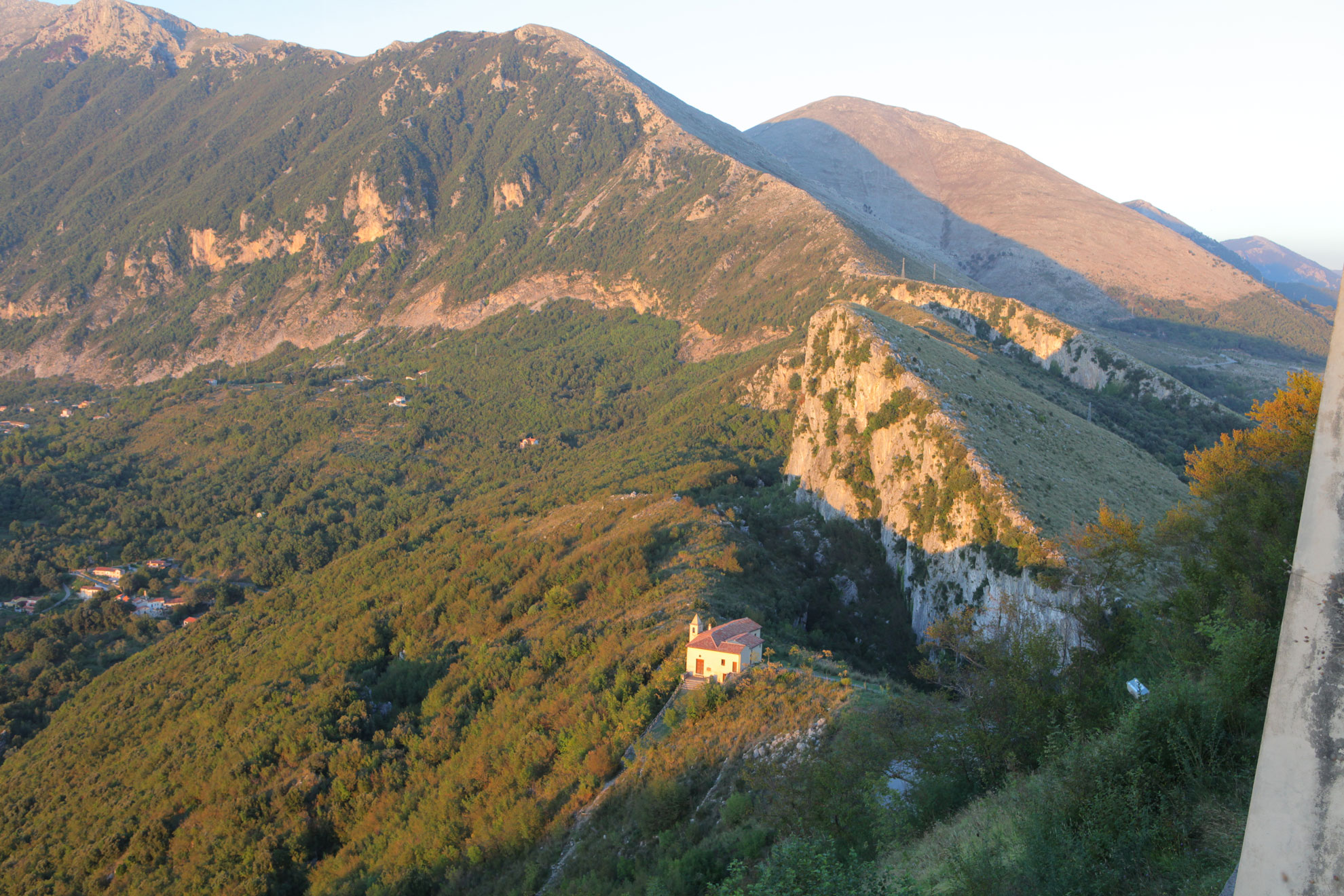
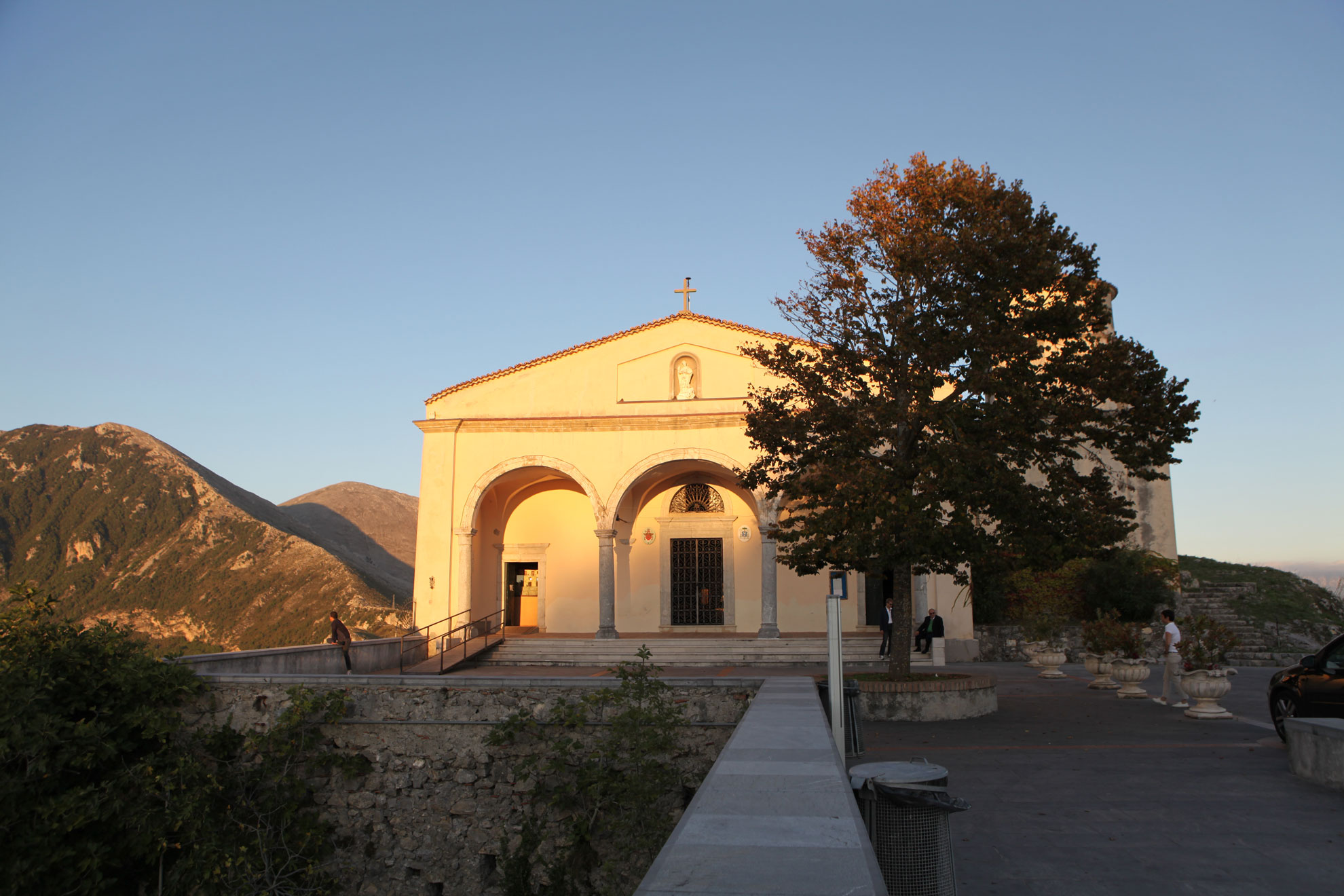
The Basilica of San Biagio
The dawn of the Basilica of San Biagio dates back to the period between the 6th and 7th century. The Basilica attained its present size as a result of extension works carried out probably in the 13th century, and the three-arch portico was added in the 18th century. During the same century, the original appearance of the inside of the Basilica was changed with the addition of Baroque-style elements, bas-reliefs, and altars.
Subsequent restoration works highlighted the simple, imposing lines of the nave and aisles. Among other things, we should point out a 17th-century marble statue of San Biagio, in a niche at the center of the tympanum, and a wrought-iron gate from the 15th century.
The little chapel where the relics of the Saint are preserved was commissioned in 1619 by Philip IV of Hapsburg, king of Spain and Naples, who also issued a decree in 1622, declaring it a “royal chapel”. The chapel, which was originally to the right of the nave, was disassembled in 1941 and reassembled in the presbytery.
The same year, the church was raised to the rank of Papal Basilica.
BEFORE THE GREAT STATUE
In 1907, an iron cross had been installed on Mount San Biagio. The name of the designer is unknown. It had to be replaced often, because it attracted lightning and was damaged by it.
In 1941, by initiative of Biagio Vitolo, podestà and subsequently mayor of Maratea, works began for the installation of a new cross made out of stone and cement, in place of the iron one.
The monumental cross, which dominated Maratea for more than twenty years, was meant to be a good omen for the speedy conclusion of World War II, which was then under way, and for Italy’s victory. Later, it became a memorial for the sacrifice of the fallen.
In 1965, the statue of Christ the Redeemer replaced the monumental cross, which was transferred to the Belvedere in the Maratea valley.